
Buyers spend their attention on the front of a metal part — the logo, the plating color, how premium it feels. Then it reaches the factory floor and the back is wrong: it will not attach to the material, it is not secure, or it sits proud and digs into whoever is wearing it. A great-looking part bolted to nothing.
There is no single best mounting method — only the right one for your part. The choice comes down to three things: what the hardware attaches to, how much load and how long a life it needs, and what tools you have to assemble it. Fabric usually wants sew-on holes; leather and denim want rivets; premium, serviceable pieces want screws; fast, low-stress assembly wants prongs; and adhesive is for temporary or smooth, undrillable surfaces.
Below are the five methods we use most for garments, bags and shoes — what each is good at, where it fails, and the back-of-the-part detail that decides it. As we tell buyers: the front decides the looks, the back decides the experience.
Sew-on holes: the most universal
Small holes at the ends or corners of the part, stitched onto the fabric. It is the most common method for a reason. It holds as long as the thread holds, the back stays flat so nothing digs in, and it works on almost any fabric — thin or thick, soft or stiff.
The cost is labor: it has to be sewn. And very thick or dense materials — full-grain leather, heavy denim — are hard work to stitch through. But for garments and fabric bags, sew-on holes are the safest, lowest-risk choice. If the part lives on cloth, this is usually where to start.
- Best for: garment labels, scarves, bag linings, shoe interiors
- Holds well on any fabric and sits flat against the body
- Needs sewing — more assembly labor, and harder on thick leather or denim
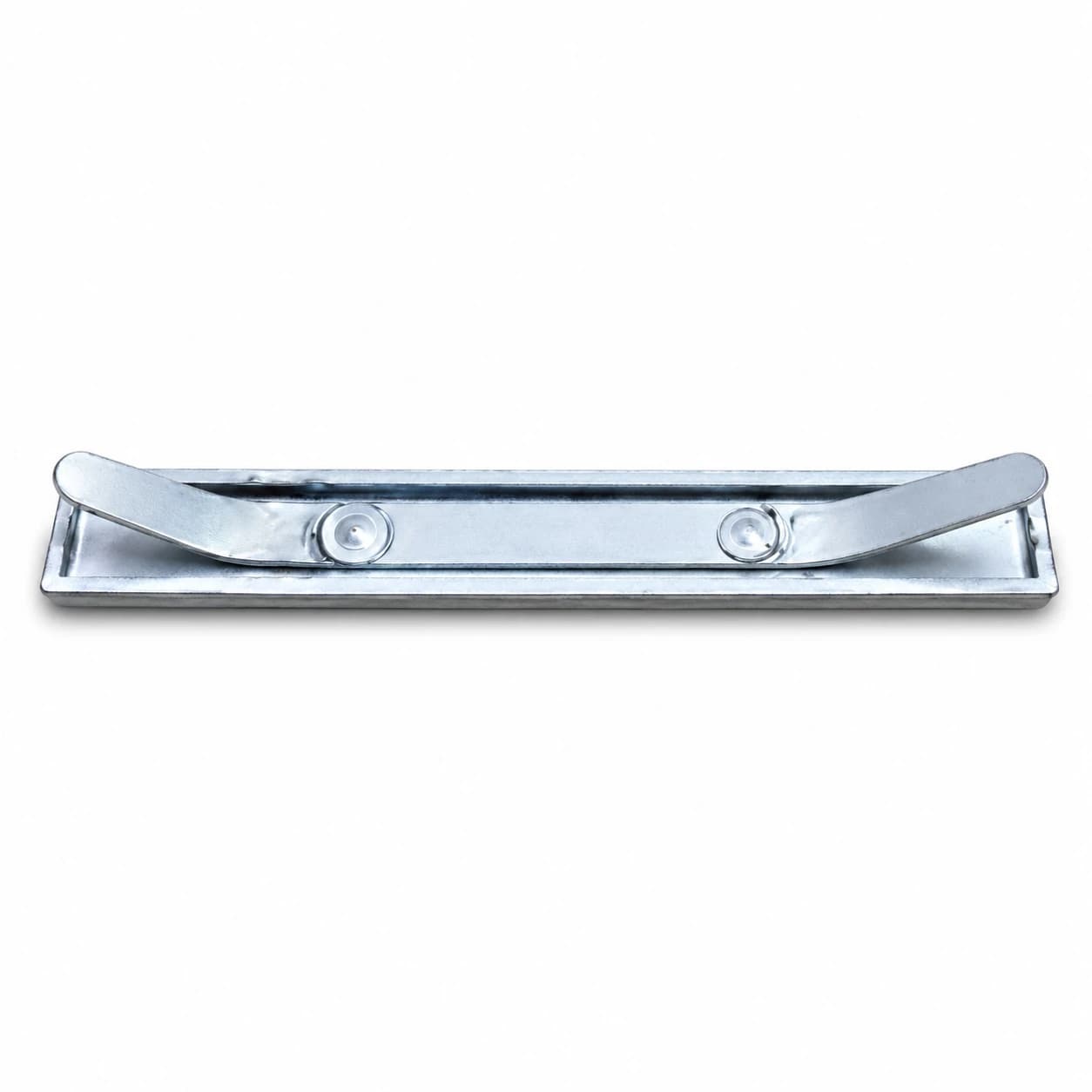
Prongs (foldable legs): the fastest to fit
Prongs — also called foldable legs or claws — are sharp legs on the back that push through the material and fold flat to lock the part in place. The big advantage is speed: no needle, no thread, just line it up, press and fold. It can be done by hand, with no special machine. Snap buttons work on the same principle — the back grips through prongs rather than stitching.
The trade-offs are real. The hold is moderate, so under heavy pull or constant tugging prongs can loosen. The back sits raised, which can dig in against the body, so we do not recommend prongs on next-to-skin garments. And thin fabric can tear, because the load concentrates on a few sharp points. Leg count matters here — two, four or six. More legs hold better but are more work to set; for a standard nameplate, four is usually enough.
- Best for: backpacks, wallets, hats, fast hand-assembly
- No tools or thread needed — quick to fit
- Moderate hold, a raised back, and risky on thin or next-to-skin fabric
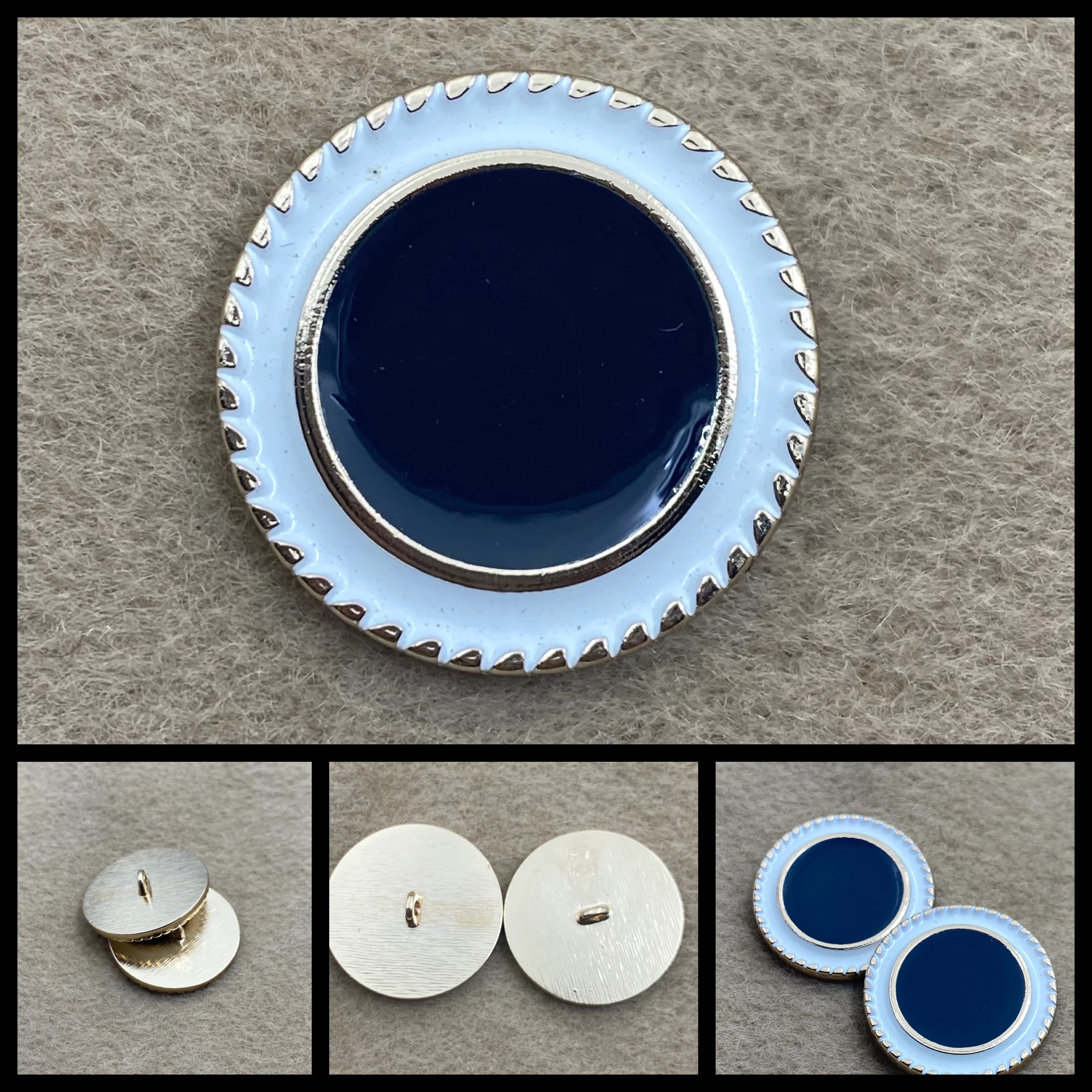
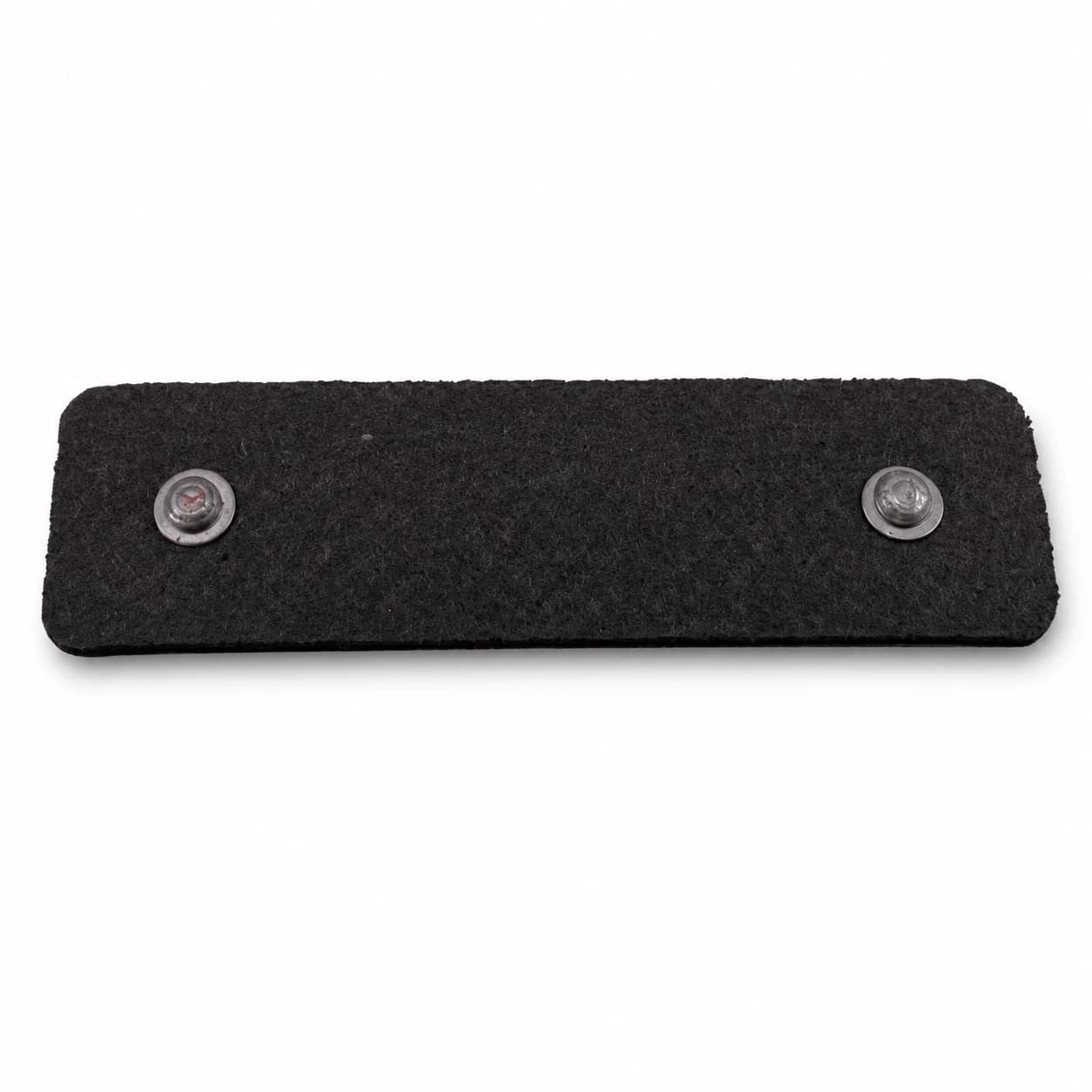
Rivets: the strongest and most permanent
Rivets are the most secure method there is. The part is riveted on from one side and fixed permanently — once it is set, it does not come off. They shrug off vibration, tension and corrosion, and the rivet itself often reads as part of the design, the way it does on denim and belts.
The catch: rivets need a tool — a rivet gun or press — so they cannot be hand-set, and they are permanent, so there is no swapping the part later. They also need enough material thickness to bite; too thin and the rivet will not pull tight. For leather goods, heavy canvas and outdoor gear that have to last, rivets are the dependable answer: set once, done for good.
- Best for: leather bags, belts, denim, outdoor gear
- Very strong — resists vibration, tension and corrosion; often decorative too
- Needs a rivet tool, cannot be removed, and needs adequate material thickness
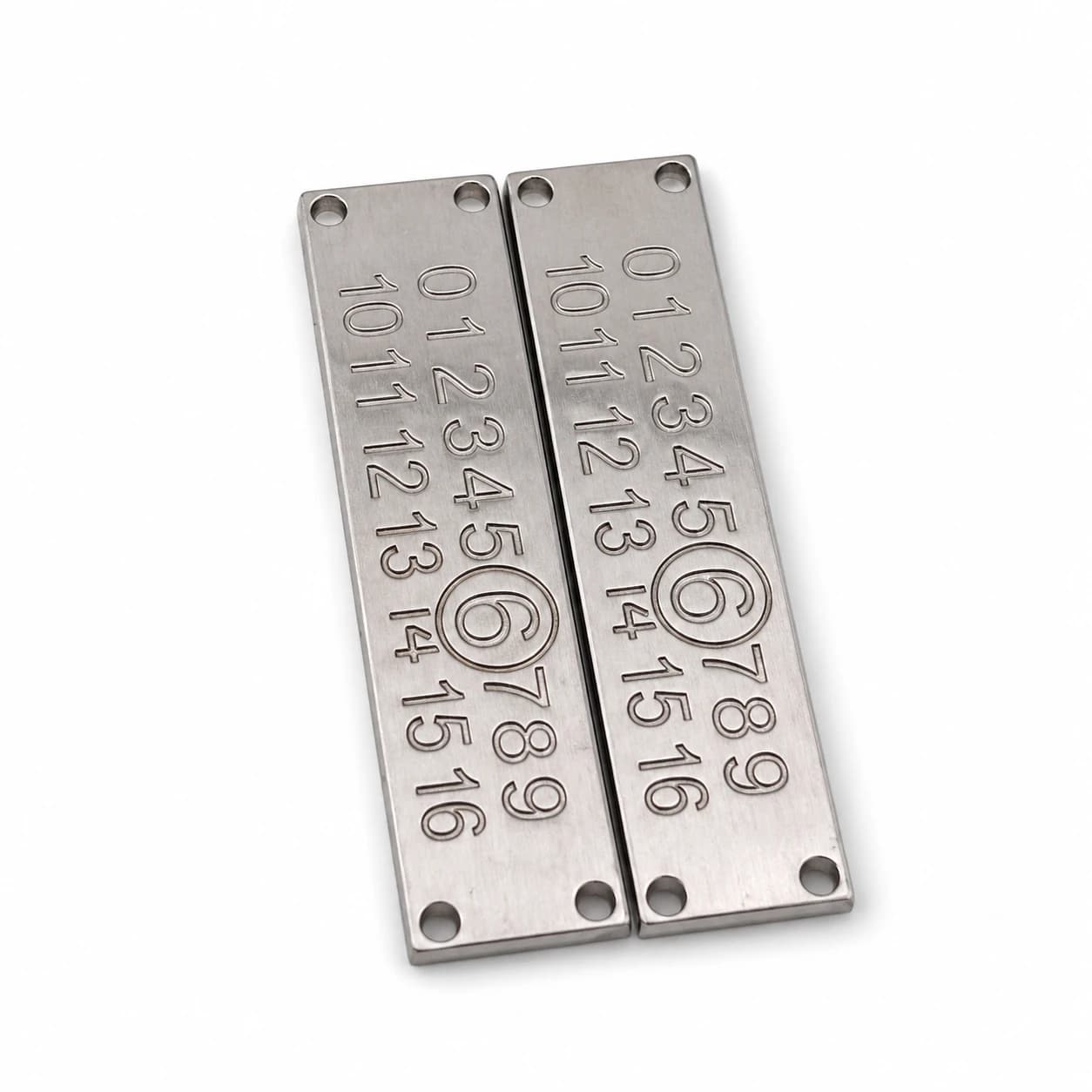
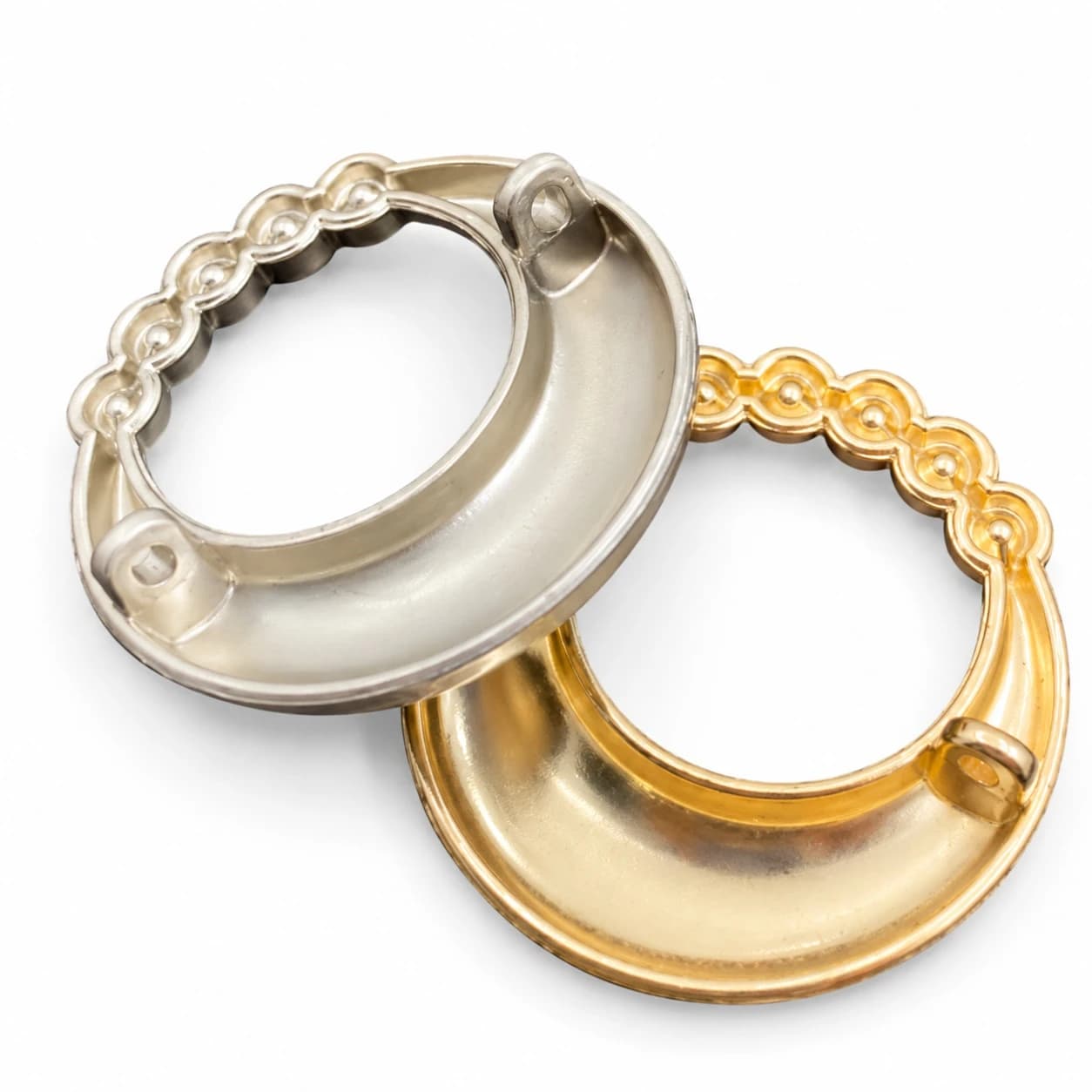
Screws: premium and removable
Screw mounting uses posts on the back that pass through the material and tighten against nuts. It tends to show up on higher-end pieces — luxury bags, premium belts, metal boxes — because it looks precise and considered, especially plated in gold or gunmetal, and because it can be taken apart and put back together.
The advantages are the high-end feel, the fact that it is serviceable — unscrew it to replace or repair the hardware later — and a hold stronger than prongs. The costs: extra parts (posts and nuts) and more assembly, work on both sides of the material, and a tendency to loosen over time where there is constant vibration. Buyers building a premium line tend to choose screws and accept the few extra cents — they are paying for the feel.
- Best for: premium bags, high-end belts, metal boxes
- Looks precise, can be unscrewed for repair, and is stronger than prongs
- More parts and assembly, two-sided fitting, and can loosen under vibration
Adhesive: simplest, but the most limited
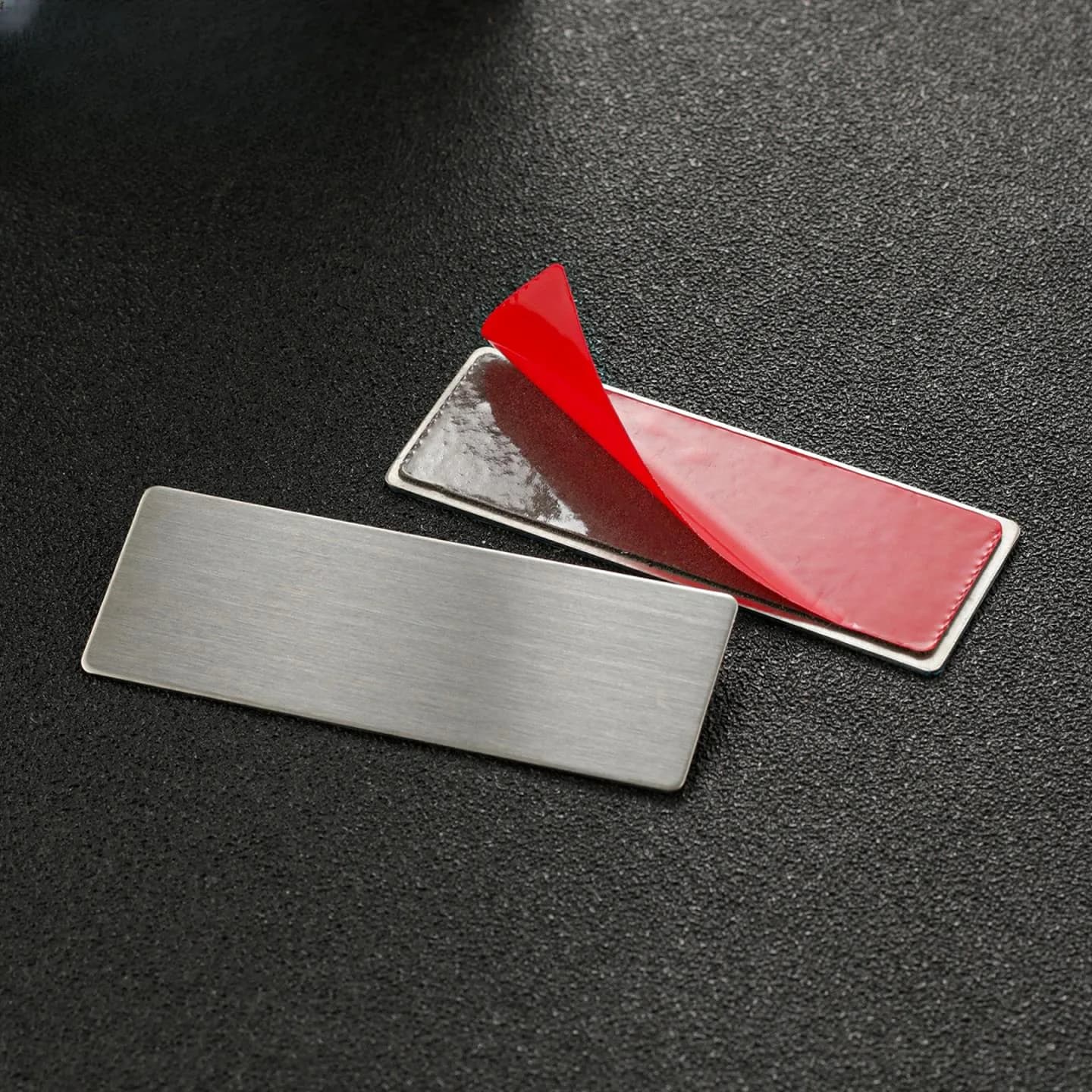
Adhesive is a backing of double-sided tape — peel the film, press it on. It is as simple as mounting gets: no tools, no holes, no damage to the surface. But the limits stack up fast. It is not secure, especially in heat or humidity, where the bond lets go. It needs a flat, smooth, clean surface — rough, porous or oily and it will not hold. And it has a shelf life: the adhesive ages and eventually peels.
So we only suggest adhesive for two cases: temporary use — trade-show samples, promo pieces — or surfaces you cannot drill, like a smooth metal panel or an electronics housing. For garments and bags it is a no: it washes off in a few cycles, and the complaint that follows lands back on you.
- Best for: temporary samples, promos, or smooth surfaces you cannot drill
- No tools, no holes, no surface damage
- Weak in heat and humidity, needs a clean flat surface, and not for anything washed
A quick way to decide
When a buyer asks us to just pick for them, we ask three questions, and the answer usually falls out on its own.
- What is the material? Fabric and garments → sew-on first, then prongs. Leather or heavy canvas → rivets first, then screws. Smooth hard surface → adhesive, for temporary use.
- How strong, and for how long? One-off or temporary → adhesive. Normal use → sew-on or prongs. Long-term, high-stress → rivets or screws.
- What can you assemble with? Sewing line → sew-on. Rivet press → rivets. Hand only → prongs or adhesive. Need it removable → screws.
How we work the back out with buyers
We check the back with you, not just the front. Before recommending a method, we run those three questions against your actual product — the material and its thickness, the load it will see, how you assemble. And we will say plainly when a method will not survive the use: prongs on a body-contact garment that will dig in, adhesive on something that gets washed, a rivet on material too thin to hold it.
From there it is the details that decide whether it works on the line — leg count matched to the fabric, rivet length matched to the thickness, a back kept flat where it sits against skin. It is the same principle every time: the front is what sells the part, but the back is the first thing the customer actually touches.
What to send so we can recommend a method
To point you to the right method quickly, tell us what the hardware mounts to and how thick it is, how much load and how long a life it needs, and how you will assemble it — by hand, with a sewing line, or with a rivet press. A photo of the back of a similar part, or of the spot it goes, answers more than a description can.
- The material it mounts to, and its thickness
- How much hold it needs, and for how long
- Your assembly setup — hand, sewing line or rivet press
- A photo of the placement, or the back of a comparable part
Practical questions buyers often ask
What's the most secure mounting method?
Rivets. They are set permanently and shrug off vibration, tension and corrosion, which is why they are standard on leather goods and denim. Screws are also strong, with the advantage of being removable for repair.
Which mounting method is best for garments?
Usually sew-on holes — they hold well, sit flat against the body and survive washing. Prongs work for non-washed fabric items like hats and bags, but the raised back can dig in on next-to-skin garments.
Can I use adhesive on a bag or a garment?
We do not recommend it. Adhesive weakens in heat and humidity and washes off after a few cycles. It is fine for temporary samples, promos, or smooth surfaces you cannot drill — not for anything worn and washed.
What do you need to recommend a mounting method?
The material and thickness it mounts to, how much hold and longevity it needs, and how you will assemble it — by hand, with a sewing line, or with a rivet press. A photo of the back of a similar part helps a lot.
Tell us what the part mounts to, how much hold it needs, and how you'll assemble it. We'll recommend a mounting method that fits the material and the use — not just the look.
Send Project Details