
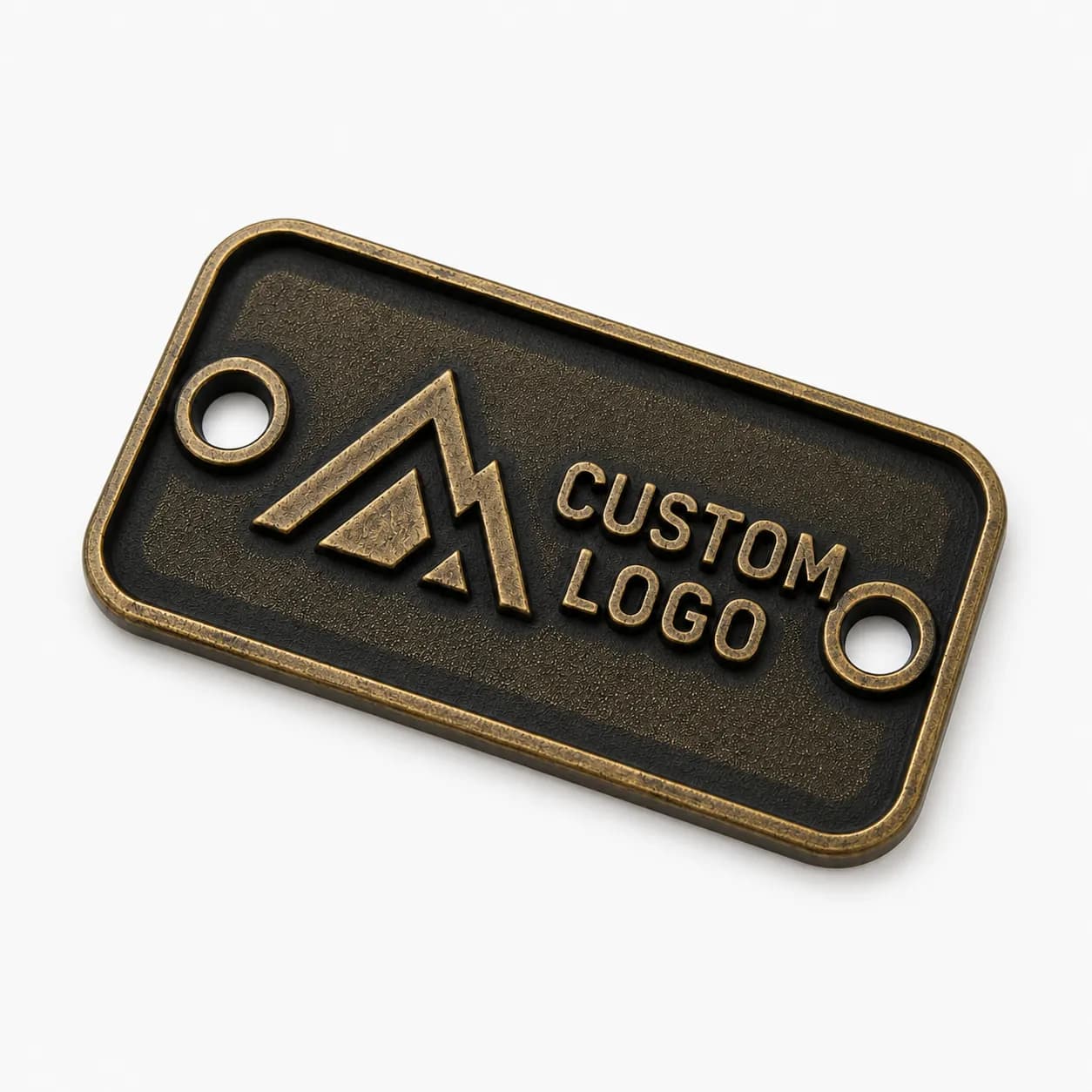
A metal logo plate earns its place on a bag by doing two things well: looking right on the front and fitting properly on the back. Most sourcing problems come from treating these as separate steps.
When we review a logo plate inquiry, we look at front effect, mounting surface, finish reference, and backside structure at the same time. A clean front rendering tells us what the brand should look like. It says nothing about pin length, prong position, edge thickness, or whether the plate will sit flush on leather, PU, canvas, nylon, or packaging board.
This article covers what to lock in before requesting a quote — especially if the plate goes on handbags, backpacks, wallets, luggage, leather goods, or premium packaging.
Why bag logo plates need more than a front-view design
The front view covers logo, border, surface shape, and brand impression. It says nothing about how the part gets fixed, whether the back will press into soft material, or whether the edge will feel sharp on the finished bag.
That is why we always ask for placement photos or a comparable sample alongside the front artwork. The clearer the use position, the faster we can judge size, thickness, edge radius, and mounting direction.
Start with bag material and placement
A logo plate on soft leather is a different engineering problem from one on canvas, nylon, PU, or a rigid box. Soft materials need softer edges and often a backing plate. A thick panel requires a longer pin or prong.
Placement matters just as much. A front flap, side panel, handle area, and inner label each lead to different structural decisions. If the attachment area flexes or rubs in use, say so at the start.
- Bag material: leather, PU, canvas, nylon or packaging board
- Placement: front flap, side panel, handle area or inner position
- Surface condition: flat, curved, flexible or rigid
Choose material, size and thickness
Zinc alloy is the standard choice for custom molded logo plates. It handles raised logos, recessed details, plating finishes, and varied back structures without compromise. Other materials are available when the design or application genuinely calls for them.
Size and thickness follow the logo detail. Small plates with thin letters need simplified artwork. Larger plates support deeper relief, wider borders, and filled color areas.
Confirm logo effect and detail level
Raised logos create a clear metal relief. Recessed or debossed logos give a quieter, more considered look. Engraving suits cleaner lines; enamel, lacquer, or oil filling adds color where the recessed areas are wide enough to hold it.
Small text is where things go wrong. Letters that are too thin lose definition after casting, polishing, or plating. Send a vector logo file, but have it checked at the actual product size before the mold is cut.
- Raised or 3D logo
- Recessed or debossed logo
- Engraved logo lines
- Filled color only where the recessed area is wide enough
Decide finish direction early
Finish changes how the logo reads. Antique brass brings out recessed lines. Gunmetal reads modern and controlled. Light gold runs warmer — appropriate for fashion or premium packaging. A finish name is a starting point, not a specification.
Send a reference photo or physical sample. The visible tone shifts with logo depth, polishing area, surface texture, and product size. Saying 'gold' leaves too much open.
Check backside structure and mounting method
The back side determines whether the plate assembles cleanly. Pins, prongs, rivets, sew-on holes, adhesive areas, and backing plates each pull the mold in a different direction and change how the bag factory attaches the part.
If you have an existing sample, send front and back photos together. Backside photos resolve more questions faster than any drawing at this stage.
What to send before requesting a quote
Keep the first inquiry simple: logo artwork or sample photo, approximate size, bag material, placement, finish reference, and mounting method if you know it. No mounting method yet? Send a photo of the bag area or an existing part instead.
Include an estimated quantity, but treat it as context — not a constraint. Product type, structure, finish, and mold requirement all shape what quantity actually makes sense.
Practical questions buyers often ask
Can you make a metal logo plate with my logo?
Yes. Send the logo artwork or a clear reference image, target size, finish direction, application, and mounting idea so we can review the structure.
Do I need a backside drawing?
Not at the start. Back photos of an existing sample or the bag placement area get us to the same place faster.
Can the finish match my sample?
A physical sample or clear finish photo is the best reference. The final result also depends on product structure, logo depth, and process route — we confirm all three together.
What affects the mold direction most?
Size, thickness, logo depth, edge shape, and mounting method. Any one of these can shift the tooling approach.
Drop us the logo file, bag material, and a finish reference. We'll tell you what the back structure needs before you commit to a mold.
Send Project Details