
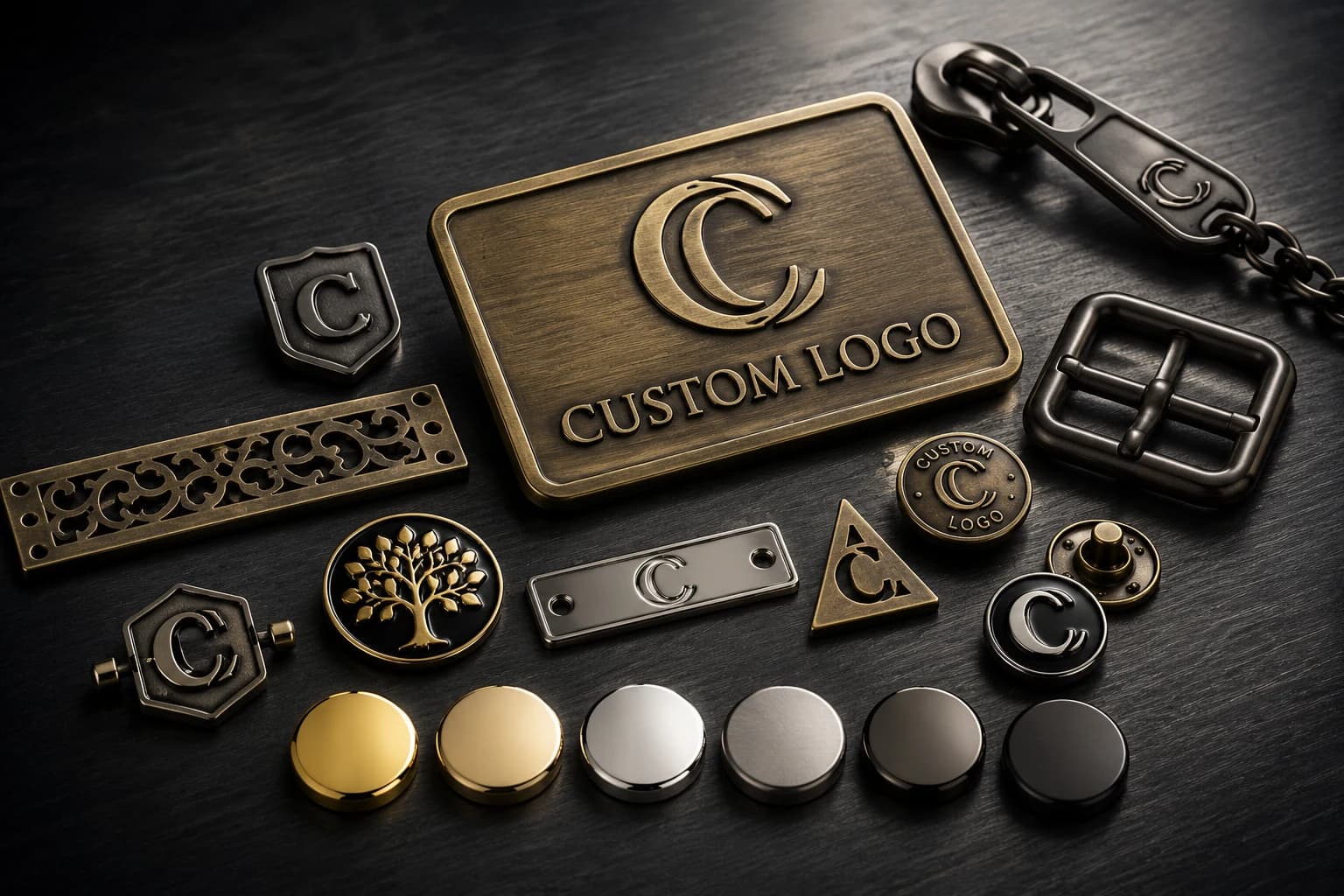
Sampling goes faster when a factory can answer three questions from your first message: what is the product, where does it go, and what are you trying to check. You do not need every technical detail ready to get that done.
A sample photo, rough size, application note, logo file, or finish reference is enough to open a useful conversation. Every additional piece of concrete information cuts a clarification round — but only if it is specific.
This guide is for buyers preparing custom zinc alloy metal hardware: logo plates, badges, zipper pullers, buckles, buttons, bag hardware, shoe accessories, or decorative trims.
Why preparation changes the sampling path
A custom metal hardware sample changes direction when product type, size, mounting method, logo process, or finish changes. One missing structure detail can redirect the mold drawing or block assembly entirely.
Preparation does not mean full documentation. It means giving the factory enough to ask the right follow-up questions rather than starting with 'can you send more details?'
You do not need every detail ready at the first message
Many buyers stall until every drawing is complete. That is unnecessary. A product photo, comparable sample, rough sketch, logo file, or reference item is enough to begin the review.
What matters is being clear about what is confirmed and what is still open. You may know the product type and finish direction but still need advice on mounting. Say that explicitly — it is more useful than staying silent.
Minimum useful input
The minimum useful input: product type, application, approximate size, and one visual reference. A logo file helps if the part carries a brand mark, but a clear sample photo works at the opening.
This tells us whether we are looking at a molded logo plate, zipper puller, badge, buckle, button, trim, or another accessory — and how to respond with something practical rather than generic.
- Product type or reference photo
- Approximate size
- Application or usage position
- Logo file or sample photo if available
Better input for faster technical discussion
Front and back photos, AI or PDF artwork, exact size, thickness, finish reference, mounting method, and estimated quantity cut the clarification rounds. The difference between one exchange and five usually comes down to what arrived in the first message.
If the target market has nickel-free or other testing requirements, flag that immediately. It affects process decisions before sampling starts.
Files, drawings, sample photos and logo artwork
Vector artwork shows line thickness and logo proportion clearly. Drawings give size and structure. Sample photos beat both because they show real appearance, back details, thickness, and assembly clues in one image.
If you only have a sketch, send it with a short explanation. A rough honest reference is more useful than a polished file that hides structure questions.
Finish, mounting and application details
Discuss finish with product shape and logo process together. A matte black part, antique brass badge, and enamel-filled logo plate each take a different process route. Treat them separately and the sampling timeline extends.
Raise mounting early. Pins, prongs, rivets, holes, loops, rings, adhesive areas, or backing plates change the mold direction and the sampling plan. Discovering this after the first sample is cut costs time and tooling.
What can wait until later
Exact packaging, final inspection arrangement, and minor artwork refinements can be settled after the first review. The priority is confirming that the factory has understood the product correctly.
Once the factory can identify the part, application, rough size, logo effect, finish direction, and mounting requirement — the project is already moving in a useful direction.
Practical questions buyers often ask
Do I need an exact drawing to start?
No. A sample photo, logo file, rough size, and application can start the first discussion. Exact drawings become useful once the sample direction is clear.
What file format is best for logo artwork?
AI or PDF vector artwork is preferred. If it is not ready, send the clearest logo image you have and note the intended product size.
Should I mention testing requirements early?
Yes — immediately. Nickel-free and other market testing requirements affect process decisions before sampling starts, not after.
What if I do not know the mounting method?
Send photos of the final product area or a similar accessory. We work out the mounting options from there.
Tell us the product, size, and application. Attach whatever reference you have — artwork, sample photo, or a rough sketch. We take it from there.
Send Project Details