
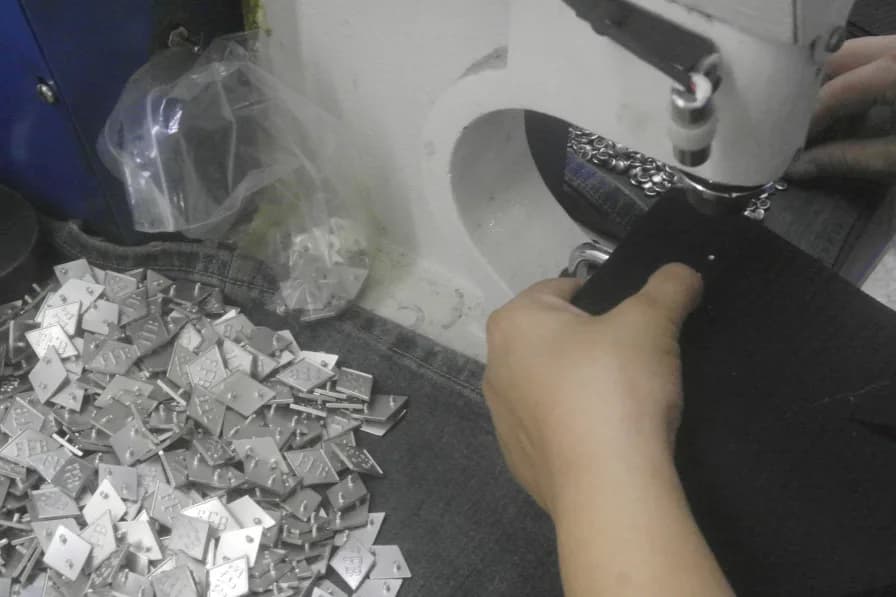
Buyers often ask for a material by name before the design is settled. But the same buckle, logo plate or zipper puller behaves very differently in zinc alloy, brass and stainless steel. One holds fine cast detail, one takes plating and warm tones well, one resists corrosion but limits shape. Choosing by habit — or by whichever material a previous supplier used — is where a lot of avoidable cost and sampling rounds come from.
When we discuss material with a buyer, we separate four things: the shape and detail the part needs, the finish the brand wants, where the part sits on the product, and the target price. The material that fits all four is usually clear once those are on the table — and it is not always the one the buyer first asked for.
Quick answer: match the material to detail, finish, application and cost
Start with the design, not the material name. Decide how much cast relief and fine detail the part needs, what finish tone the brand wants, and how much handling or exposure the part will see in use. Then check which material can produce that at the target quantity and price.
For most garment, bag and fashion accessory projects — logo plates, badges, zipper pullers, buckles, decorative trims — zinc alloy is the default because it casts fine detail cleanly and accepts a wide range of finishes. Brass and stainless steel are chosen for specific reasons, not as a general upgrade.
- Detail and shape complexity the part requires
- Finish tone, plating and color-fill direction
- Contact points, handling and any corrosion exposure
- Target quantity and unit-cost expectation
Zinc alloy: the default for cast detail and finish flexibility
Zinc alloy (zamak) is die-cast, which means molten metal is pressed into a steel mold under pressure. This produces sharp edges, fine relief, undercuts and three-dimensional shapes that are difficult or expensive to reach with other methods. For a logo plate with recessed lettering, a badge with layered relief or a sculpted zipper puller, this is the main reason zinc alloy is chosen.
It also takes a wide range of finishes — antique bronze, antique silver, gunmetal, matte black, gold-tone and polished tones — and accepts color fill and decorative inserts in recessed areas. That finish flexibility is why most of the custom hardware in garment and bag projects is zinc alloy.
The trade-offs are weight and corrosion behavior. Zinc alloy is heavier than many buyers expect, which can be an advantage for a premium feel or a consideration on large trims. Its corrosion resistance depends on the plating layer, so exposed contact points and outdoor use need the finish and testing discussed by application.
- Best for: detailed logo plates, badges, zipper pullers, buckles, decorative trims
- Strong at: fine cast relief, finish range, color fill and inserts
- Confirm: plating durability at contact points, part weight at larger sizes
Brass: warm tone, solid feel, higher material cost
Brass is a copper-zinc alloy with a naturally warm tone and a dense, solid feel. It is chosen when a brand wants genuine metal warmth rather than a plated gold appearance, or when the part is small, thick and works well as stamped or machined hardware — some buckle frames, eyelets, small fittings and premium fastenings.
Brass can be die-cast, stamped or machined depending on the shape. Stamped brass suits flatter parts; cast brass suits more sculpted forms but costs more than zinc alloy for the same shape because the raw material is more expensive. For deep, detailed cast relief, zinc alloy usually reaches the same result at a lower cost.
The main reasons to specify brass are the base tone and perceived quality — a polished or brushed brass surface reads differently from a gold-plated zinc part under close inspection. If the finish will be fully plated over anyway, that advantage is largely lost, and the higher material cost is harder to justify.
- Best for: parts where genuine metal tone and weight matter, some buckles and fittings
- Strong at: warm base color, solid feel, corrosion behavior better than bare zinc
- Confirm: whether the brass tone will show or be plated over, and cost vs zinc for the shape
Stainless steel: corrosion resistance with shape and detail limits
Stainless steel is chosen primarily for corrosion resistance and strength. For functional parts that face moisture, sweat, salt air or heavy repeated stress, it holds up where a plated part may eventually wear at contact points. Some functional buckles, D-rings and load-bearing fittings are specified in stainless for this reason.
The trade-off is shape and detail. Stainless is usually stamped, laser-cut or machined rather than die-cast, so deep three-dimensional relief and sculpted logo detail are limited or expensive. It also takes a narrower range of decorative finishes than zinc alloy, and fine color-fill work is harder to place cleanly. For a highly detailed decorative logo plate, stainless is rarely the right route.
Stainless is best viewed as a functional material, not a decorative one. When a part needs both strong corrosion resistance and detailed branding, the two requirements sometimes have to be split — a stainless functional component with a separate zinc alloy branded element — rather than forced into one part.
- Best for: functional, high-stress or corrosion-exposed fittings
- Strong at: corrosion resistance, strength, low maintenance
- Confirm: detail limits, finish range and whether branding needs a separate part
How material affects finish and logo readability
The base material changes how a finish reads. The same gold-tone plating over zinc alloy, brass and stainless can appear slightly different because the underlying surface, polish level and how the metal takes plating are not identical. A finish reference approved on one material should not be assumed to carry across to another without a new sample.
Cast detail also depends on material. A logo with fine lines and small text may hold cleanly in die-cast zinc alloy but soften or need simplifying in a stamped stainless part. When branding detail is critical, we compare the smallest text and thinnest line against the material and process before confirming the mold direction.
Where material-choice problems often appear
Most material mismatches trace back to choosing before the design and application were reviewed together.
- Detail loss: a highly detailed logo specified in stamped stainless instead of cast zinc alloy
- Cost surprise: cast brass chosen for a deep-relief part where zinc alloy would reach the same look for less
- Finish mismatch: a plating reference approved on one material assumed to carry to another
- Corrosion at contact points: a decorative material used where a functional, exposed part needed corrosion resistance
- Unexpected weight: a large zinc alloy trim heavier than the product design allowed for
- Plated-over brass: paying for a brass base that is then fully covered by plating
What we check before recommending a material
Before confirming a material, we translate the brief into checks against the actual part.
- Product type, dimensions and shape complexity
- Depth and fineness of logo or decorative relief
- Finish tone, color fill and any decorative inserts
- Mounting method and points exposed during assembly
- Application, contact points and corrosion exposure
- Target quantity and unit-cost expectation
- Any project-based wear, chemical or salt-spray testing requirement
What buyers should send for an RFQ
To recommend a material, we need the design intent and the application, not a material name on its own.
- AI, PDF, SVG or EPS artwork when available
- Target dimensions and product type
- Finish direction and any color-fill or insert areas
- Application, mounting method and contact areas
- Any corrosion, wear or strength requirement
- Estimated quantity
Related product examples
These published products show how material, detail and finish work together. They are reference examples only; the material and process for a new project still need confirmation against approved artwork and the application.
Practical questions buyers often ask
Is zinc alloy lower quality than brass or stainless steel?
No. Zinc alloy is chosen for its casting detail and finish flexibility, not as a cheaper substitute. For detailed decorative hardware it is often the most suitable material, while brass and stainless are chosen for specific tone or corrosion reasons.
Can I get a real gold or brass look without paying for brass?
Often yes. A gold-tone or brass-tone plating over zinc alloy reproduces the appearance for most applications. Solid brass is mainly worth specifying when the genuine base tone will remain visible under close inspection.
Which material is best for outdoor or high-moisture use?
Stainless steel resists corrosion best for functional exposed parts. Zinc alloy can be used outdoors when the plating and any testing are confirmed for the application, but the finish layer does more of the work.
Does the material change my mold cost?
It can. The material and process affect the mold structure and tooling approach, so material should be discussed alongside the mold direction rather than after.
Send your artwork, product dimensions, finish direction and application. We can suggest the material that fits your detail, finish and cost — and flag anything that still needs sample approval.
Send Project Details